
I am a software entrepreneur based in the Bay Area.
- Co-founded Volition, a small but well-funded team that builds AI-powered software.
- Previously, co-founded Gradescope. If you took a STEM class at a major university in the last 5-10 years, you’ve likely used it.
- Co-developed Full Stack Deep Learning, a set of courses on building AI-powered software.
- Did my PhD at UC Berkeley, working with Trevor Darrell on computer vision.
- Went to University of Washington for undegrad.
- Originally from Russia, moved to Seattle when I was 11.
If you believe I may be helpful in a specific and special way, get in touch on X or email.
Goals · Some Beliefs · X Backup
Volition
The co-founders of Gradescope re-united to start Volition, a product studio. We are currently working on the best way to build software with AI agents.
Recent Vibe Projects
Claude Code with Opus 4.5 is a watershed moment for software development, making the first 80% of an app take minutes instead of days. I’m making my way through a backlog of little software ideas with it.

AI Model Comparison Table
A single-page web app to compare AI models by pricing, capabilities, and benchmark performance.
[Website]
[GitHub Repo]

Multichat
Run `uvx multichat` to receive responses from all four frontier LLMs.
[GitHub Repo]
[PyPI]

X Backup
Run `npx x-backup ﹤path-to-twitter-data-export﹥` to create a beautiful, searchable, sortable single page backup of all of your X posts.
[GitHub Repo]
[NPM]
[Example]

World Demographic Half-Life Map
Interactive visualization showing how long until half the population of each country will have been born after a given year.
[Page]
Full Stack Deep Learning
I co-developed an educational program that helps you go from a promising ML experiment to a shipped product, with real-world impact. All of our materials are available for free online.
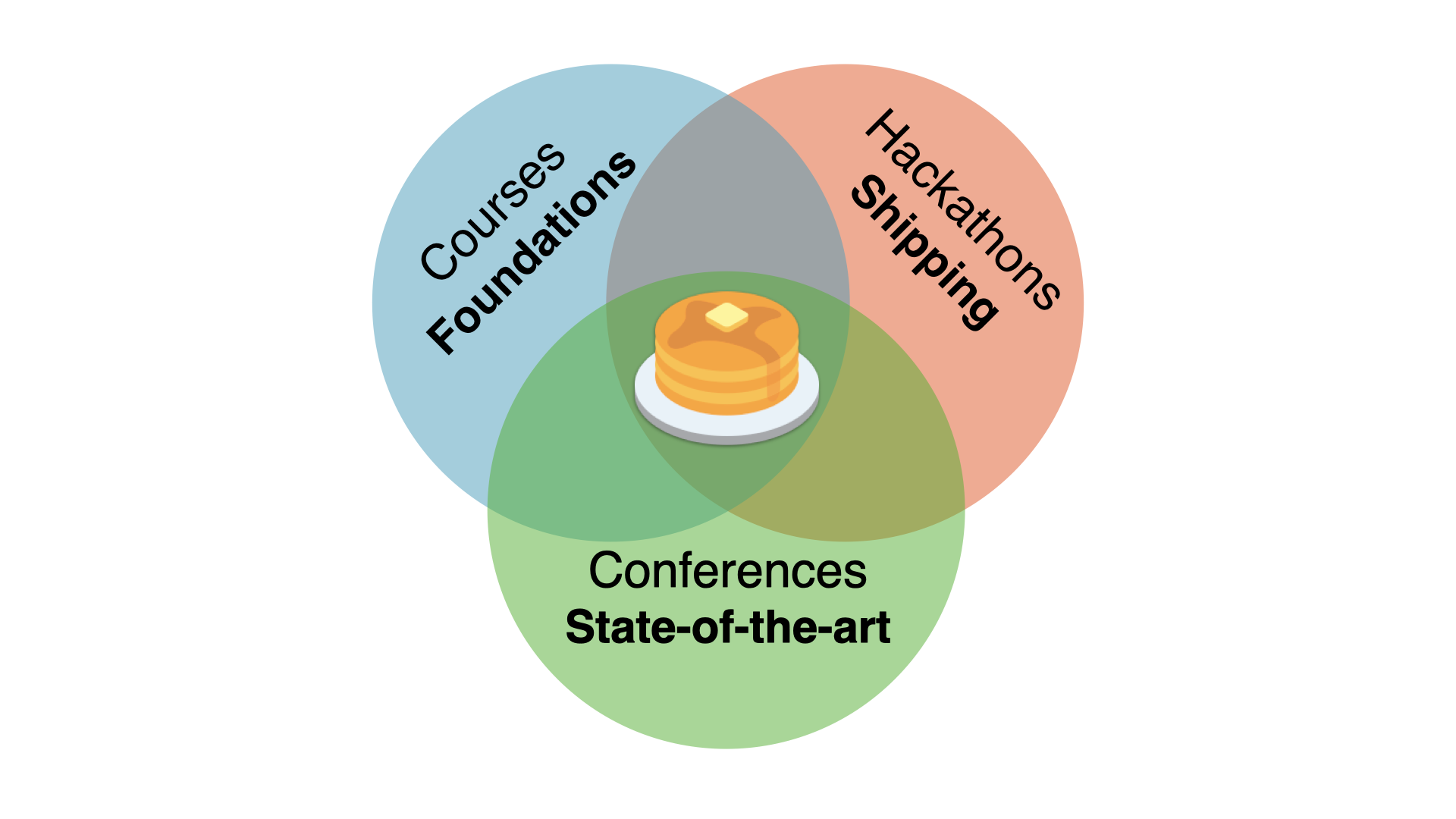
2023 LLM Bootcamp
Learn best practices and tools for building LLM-powered apps!
Charles Frye, Sergey Karayev, Josh Tobin
[Materials]
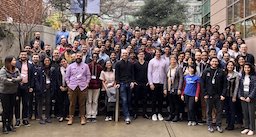
2018-2022 Bootcamps and Courses
We hosted three weekend bootcamps in Berkeley, then taught the course as a University of Washington MS course, a UC Berkeley undergrad course, and an online course open to all.
Sergey Karayev, Josh Tobin, Charles Frye, Pieter Abbeel
[UC Berkeley 2021 Course]
[Online 2022 Course]
Gradescope
I co-founded Gradescope, an AI-assisted tool for grading all kinds of exams and assignments. Gradescope was acquired as a standalone product by Turnitin, a leading ed tech provider, where I worked as Head of AI.
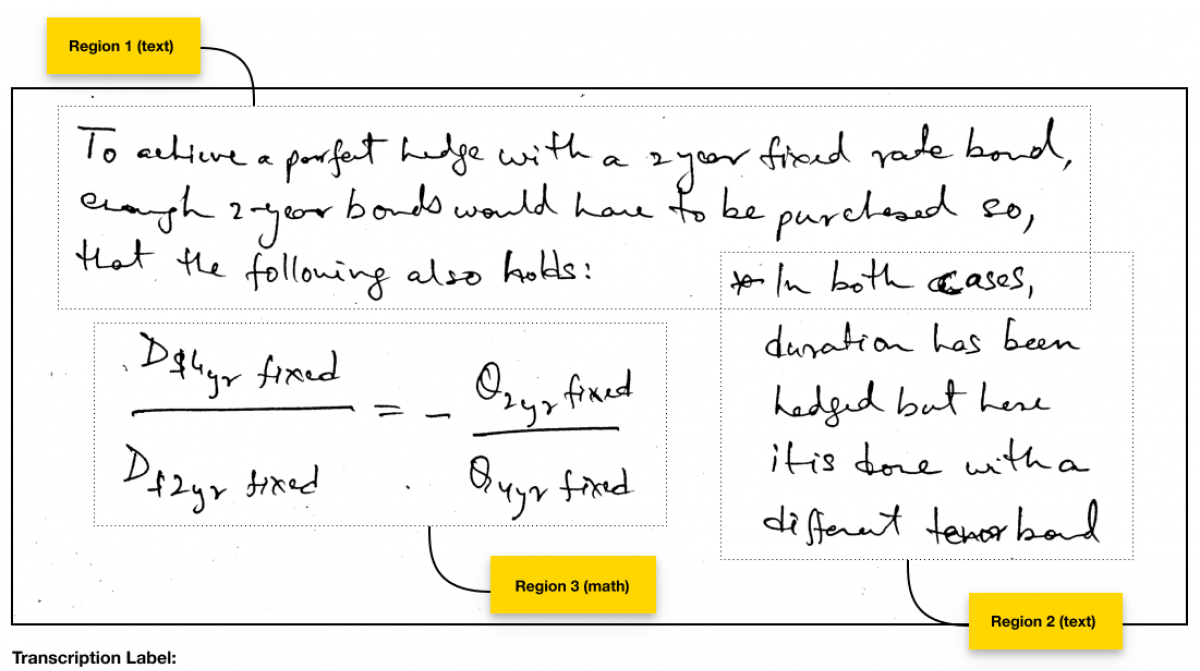
Full Page Handwriting Recognition via Image to Sequence Extraction
Sumeet Singh, Sergey Karayev
ICDAR 2021
[paper]
[Import AI newsletter]
[The Batch newsletter]
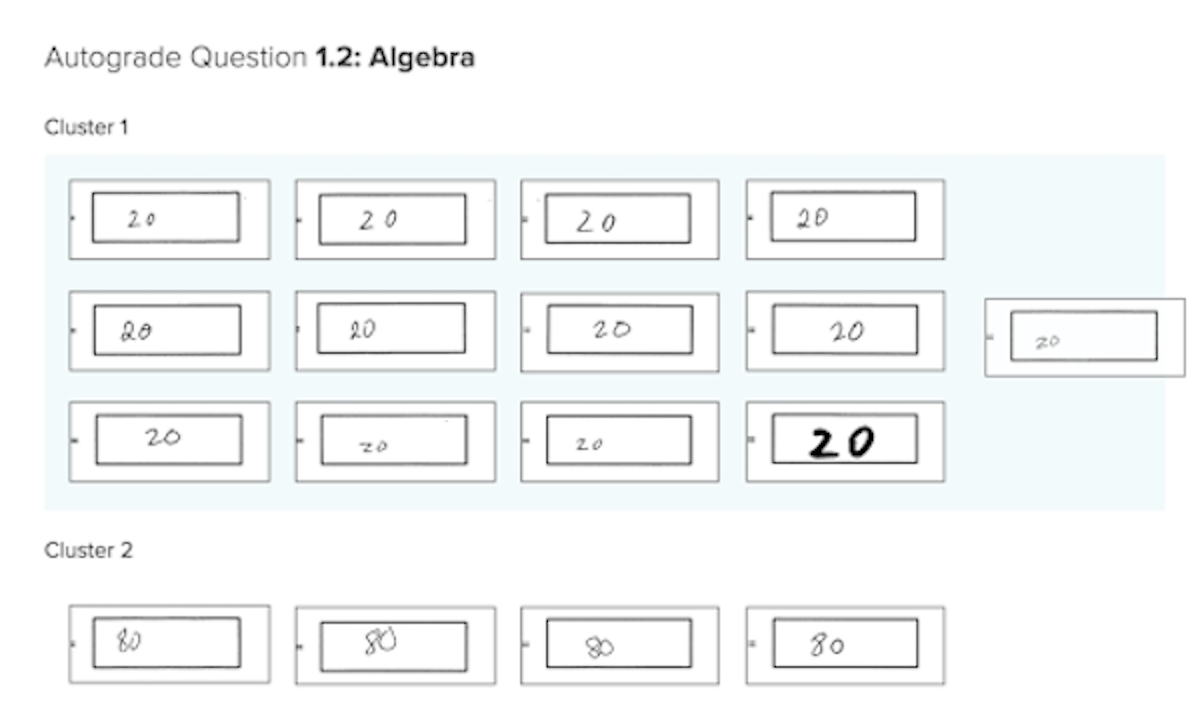
Design Principles of AI-Assisted Grading
Sergey Karayev, Kevin Gutowski
Turnitin Tech Blog 2020
[blog post]
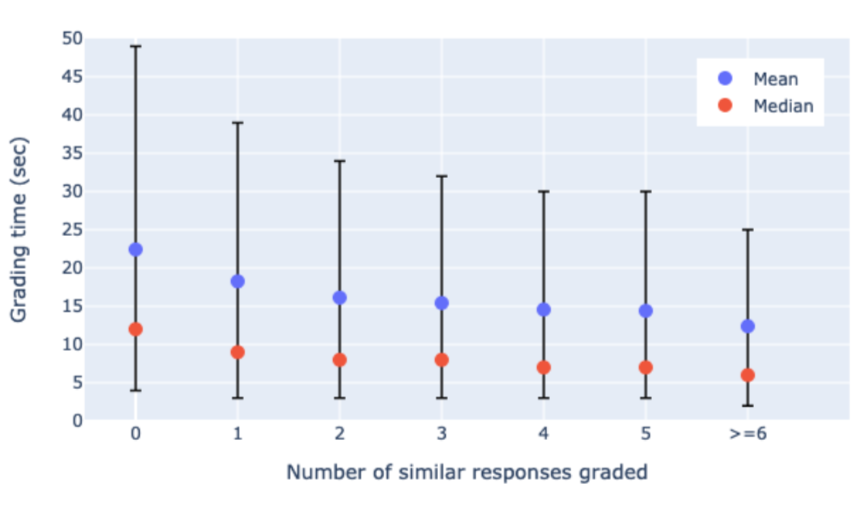
Analysis of Grading Times of Short Answer Questions
Michael Yen, Sergey Karayev, Eric Wang
Learning at Scale 2020
[paper]
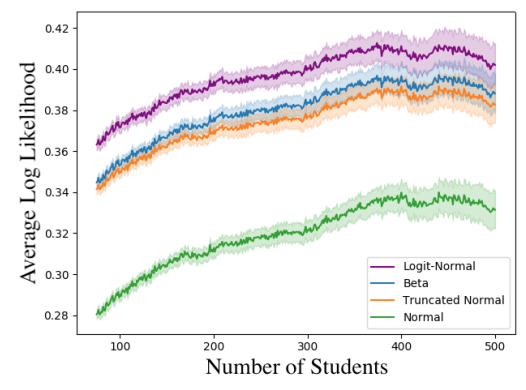
Grades are not Normal: Improving Exam Score Models Using the Logit-Normal Distribution
Noah Arthurs, Ben Stenhaug, Chris Piech, Sergey Karayev
Educational Data Mining 2019
[paper]
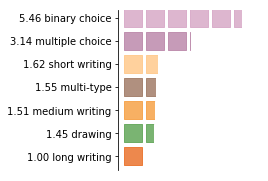
How Do Professors Format Exams? An Analysis of Question Variety at Scale
Paul Laskowski, Sergey Karayev, Marti Hearst
Learning at Scale 2018
[paper]
[slides]
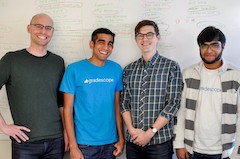
The Future of Grading
The Gradescope Team
[blog post]
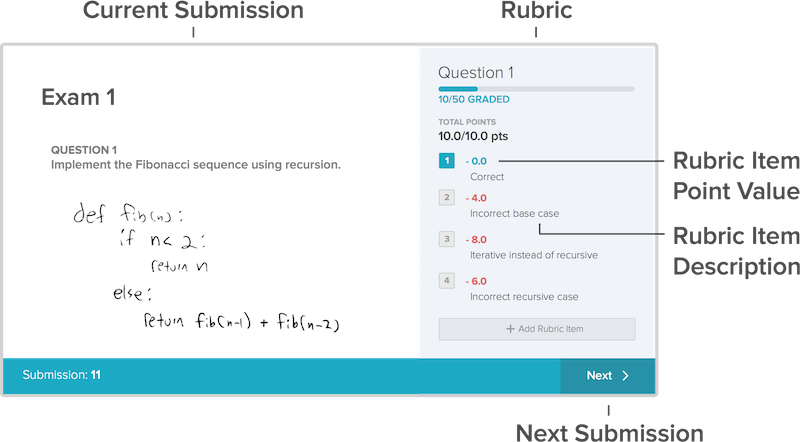
Gradescope: a Fast, Flexible, and Fair System for Scalable Assessment of Handwritten Work
Arjun Singh, Sergey Karayev, Kevin Gutowski, Pieter Abbeel
Learning at Scale 2017
[paper]
PhD at UC Berkeley
I finished a PhD in Computer Science at UC Berkeley, working on computer vision with Trevor Darrell, teaching with Pieter Abbeel, and interning at Adobe Creative Technologies Lab and Artsy.
Recognizing Image Style
During a summer research internship at Adobe Creative Technologies Lab, I gathered datasets of photo and painting style, and used CNNs to classify different visual styles.

Recognizing Image Style
Sergey Karayev, Matthew Trentacoste, Helen Han, Aseem Agarwala, Trevor Darrell, Aaron Hertzmann, Holger Winnemoeller
BMVC 2014
[arXiv page]
[pdf]
[writeup sources]
[code and data]
Caffe Deep Learning Framework
The deep learning paradigm shift was enabled by open source software, including Caffe from our Berkeley research lab. The Caffe team was honored by the Everingham Prize in 2017.

Caffe: Convolutional architecture for fast feature embedding
Yangqing Jia, Evan Shelhamer, Jeff Donahue, Sergey Karayev, Jonathan Long, Ross Girshick, Sergio Guadarrama, Trevor Darrell
ACM Multimedia 2014
[pdf]
[project]
[code]
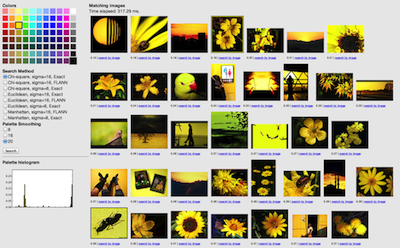
Multi-color image search
During my summer internship at Artsy, I became interested in color perception and indexing images by color. I developed an open-source system for quickly searching large image collections by multiple colors given as a palette, or by color similarity to a query image.
[project]
Anytime Visual Recognition
Features have different costs and different classes benefit from different features. A multi-class recognition system should dynamically select them to maximize performance under a cost budget. This line of work constitutes my PhD Thesis. Sources for all of the writeups below are open-source.
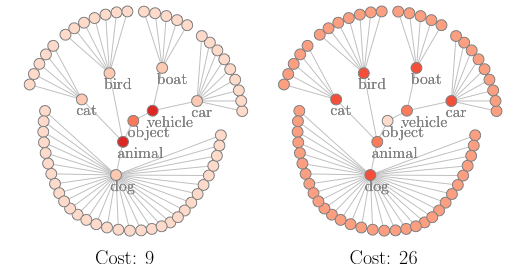
Anytime Recognition of Objects and Scenes
Sergey Karayev, Mario Fritz, Trevor Darrell
CVPR 2014 (Oral)
[pdf]
[slides]
[poster]
[code]
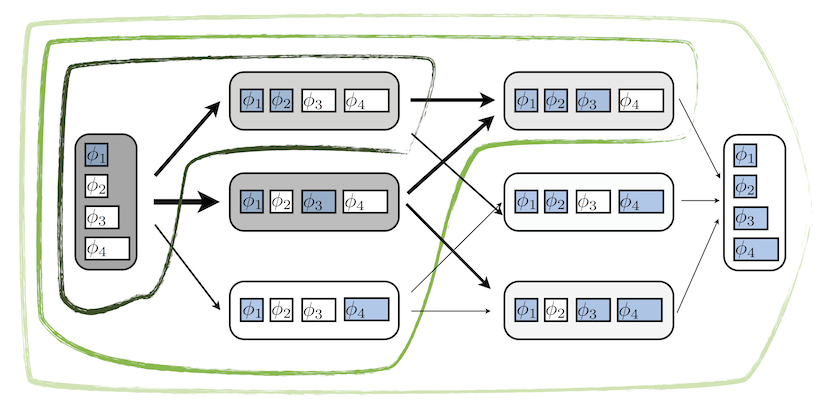
Dynamic Feature Selection for Classification on a Budget
Sergey Karayev, Mario Fritz, Trevor Darrell
ICML-W 2013 - Prediction with Sequential Models
[pdf]
[slides]
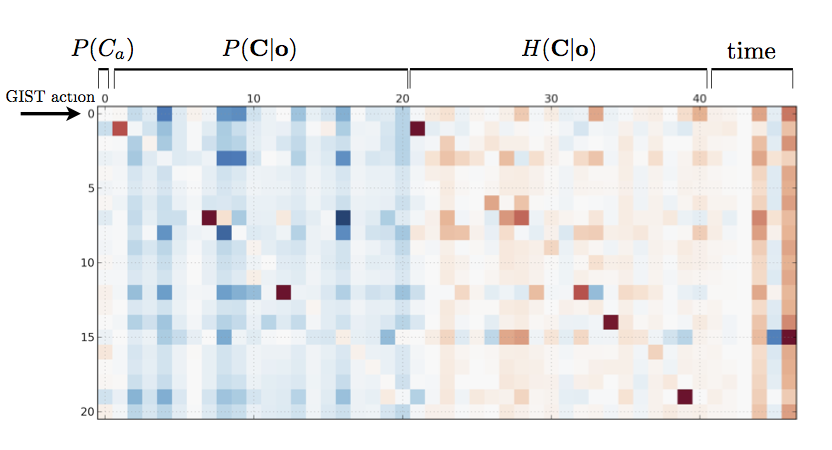
Timely Object Recognition
Sergey Karayev, Tobias Baumgartner, Mario Fritz, Trevor Darrell
NIPS 2012
[pdf]
[poster]
[code]
Depth-informed Object Detection
Using the Microsoft Kinect, we gather a large dataset of indoor crowded scenes. We investigate ways to unify state-of-the-art object detection systems and improve them with depth information.
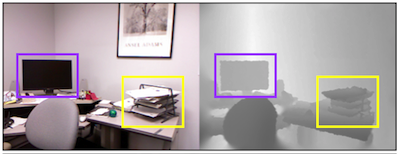
A Category-Level 3-D Object Dataset: Putting the Kinect to Work
Allison Janoch, Sergey Karayev, Yangqing Jia, Jonathan T. Barron, Mario Fritz, Kate Saenko, Trevor Darrell
ICCV-W 2011
[pdf]
[dataset]
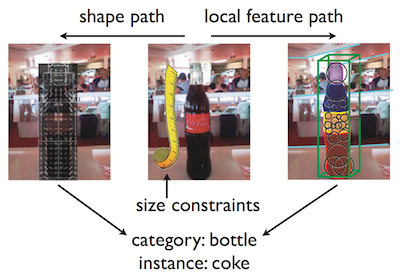
Practical 3-D Object Detection Using Category and Instance-level Appearance Models
Kate Saenko, Sergey Karayev, Yangqing Jia, Alex Shyr, Allison Janoch, Jonathan Long, Mario Fritz, Trevor Darrell
IROS 2011
[pdf]
Probabilistic Local Image Features
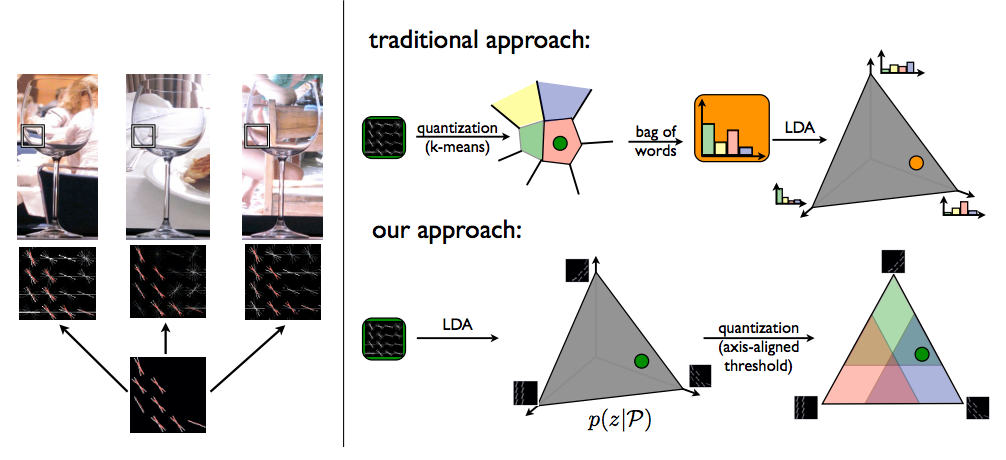
Our method for additively decomposing local image patches shows best performance on a novel transparent object recognition dataset. We extend the model to multiple layers and apply it to general object classification.
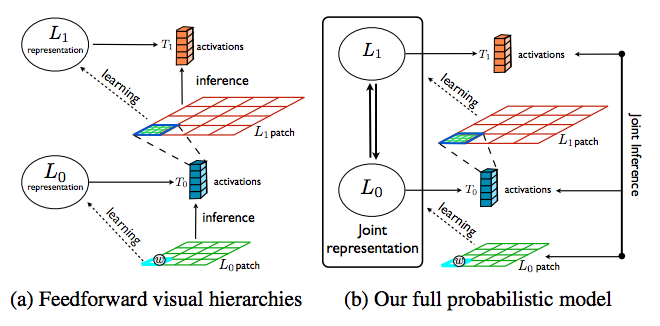
A Probabilistic Model for Recursive Factorized Image Features
Sergey Karayev, Mario Fritz, Sanja Fidler, Trevor Darrell
CVPR 2011
[pdf]
[supplement]
[poster]
[slides]
An Additive Latent Feature Model for Transparent Object Recognition
Mario Fritz, Michael Black, Gary Bradski, Sergey Karayev, Trevor Darrell
NIPS 2009
[pdf]

Foveal Explorer
A JavaScript applet for exploring images "foveally," by moving a high-resolution area around. Written to gather visual attention data on Amazon Mechanical Turk.
[project]
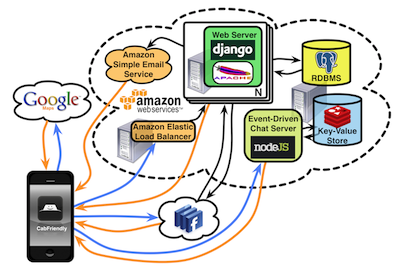
CabFriendly
A cloud-based mobile web application to match up users who request similar trips and would like to share a cab. The application is hosted on EC2 and combines several open-source frameworks with social networking and location-awareness APIs.
[project]
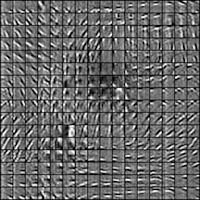
Self-organizing sparse codes
The biological motivation for sparse coding also suggests that the learned receptive field elements should be organized spatially. We investigate ways of enforcing a topography over the learned codes in a locally self-organizing map approach. (VS 265 course project)
[pdf]
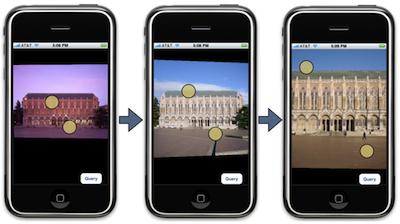
BS at University of Washington
I was fortunate to work first with Luis Ceze and then Steve Seitz on undergraduate research at UW Seattle. In 2019, I was honored by the UW Engineering Early Career Award.
Other stuff
- Some electronic music I made from time to time.
- First Person Stories: a collection of tiny stories.
- Best Coast Tour: the summer after my first year in grad school, a friend and I biked down from the Canadian border to San Francisco.
- Eurotrip ‘09: a partial account of a “backpacking” trip to Western Europe I did before starting grad school.
- : my old personal website.